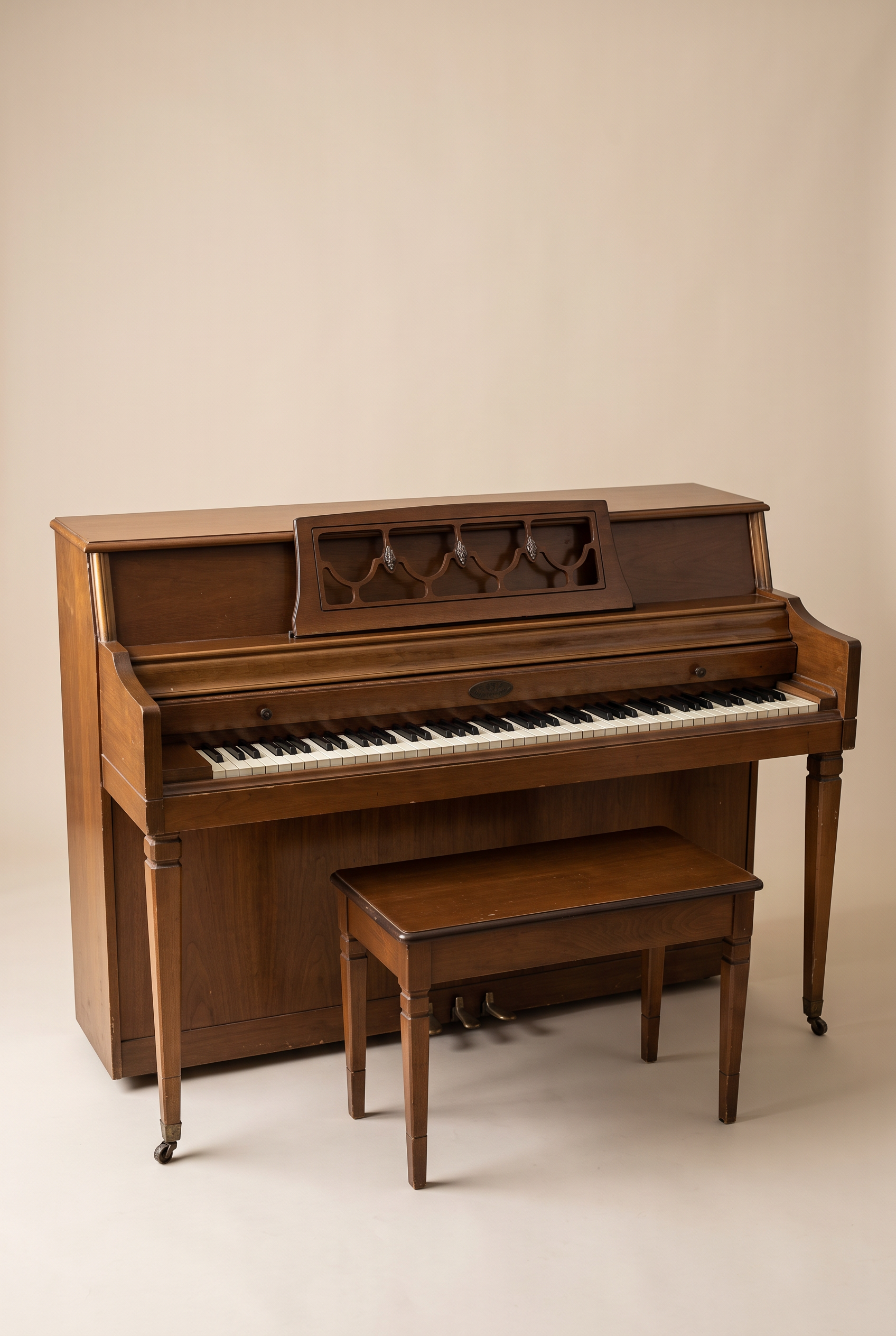
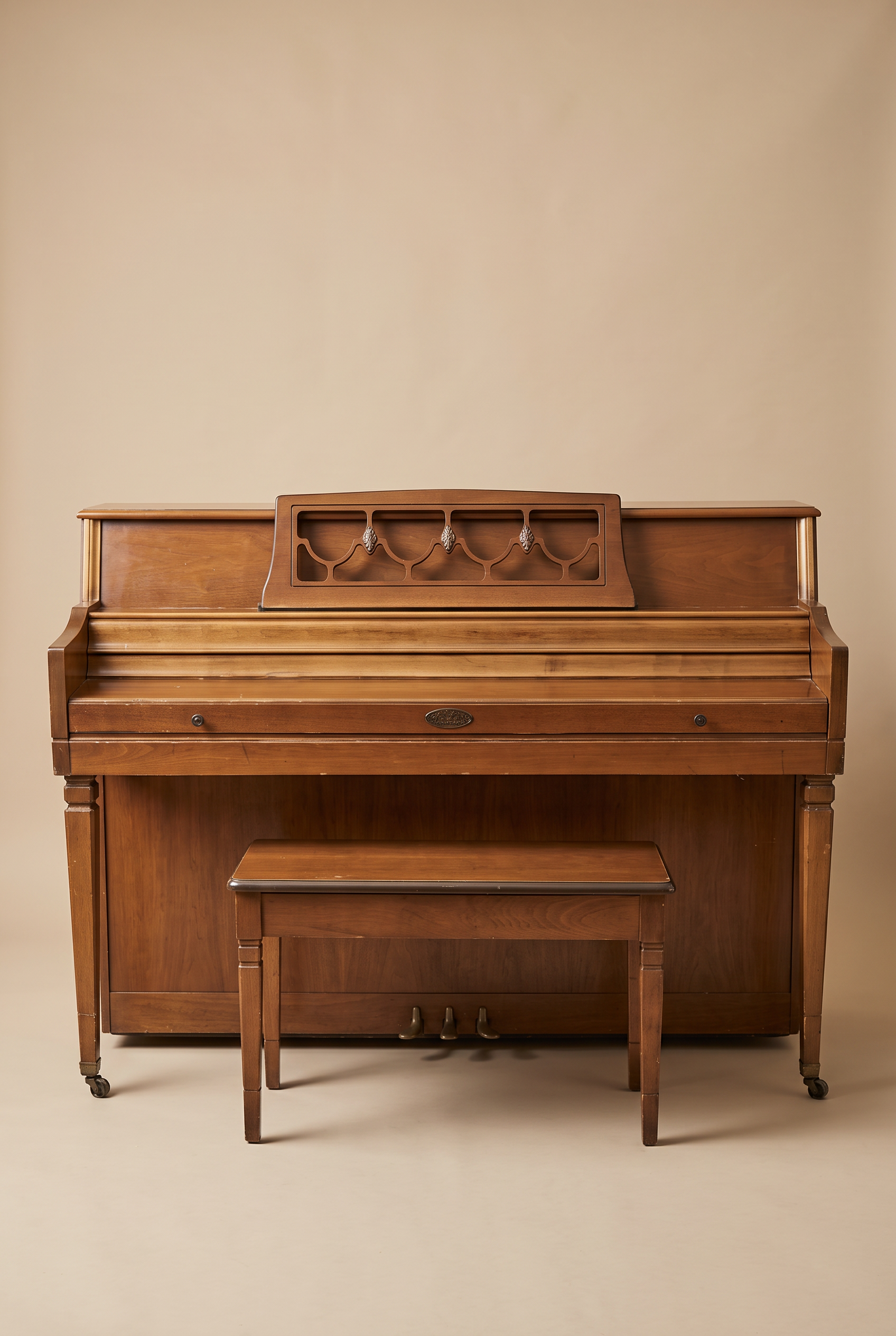
A compact upright piano with a warm brown wood finish, a decorative openwork music rest, and slender front legs with subtle geometric detailing. Small metallic accents and brass-toned pedals complement the cabinet’s understated character.
Accompanied by a coordinating wooden bench, this distinctive ensemble brings the charm of a traditional music room to an intimate interior. Visible surface wear adds character to its finish.
Maker and date have not been confirmed. Playing condition and tuning status have not yet been assessed.

MP - 017
Date (circa) 1910–1930
Type: Formal Dining Table with Chair Set, with leather seats and hand hammreed nailheads. (2 armchairs and 6 side chairs).
Style: Spanish Colonial Revival / Mediterranean Revival
Region: Argentina . Wood: Likely Walnut or algarrobo
Stone Top: The top is almost certainly green marble, not jade.”
44” X 99” X 32”
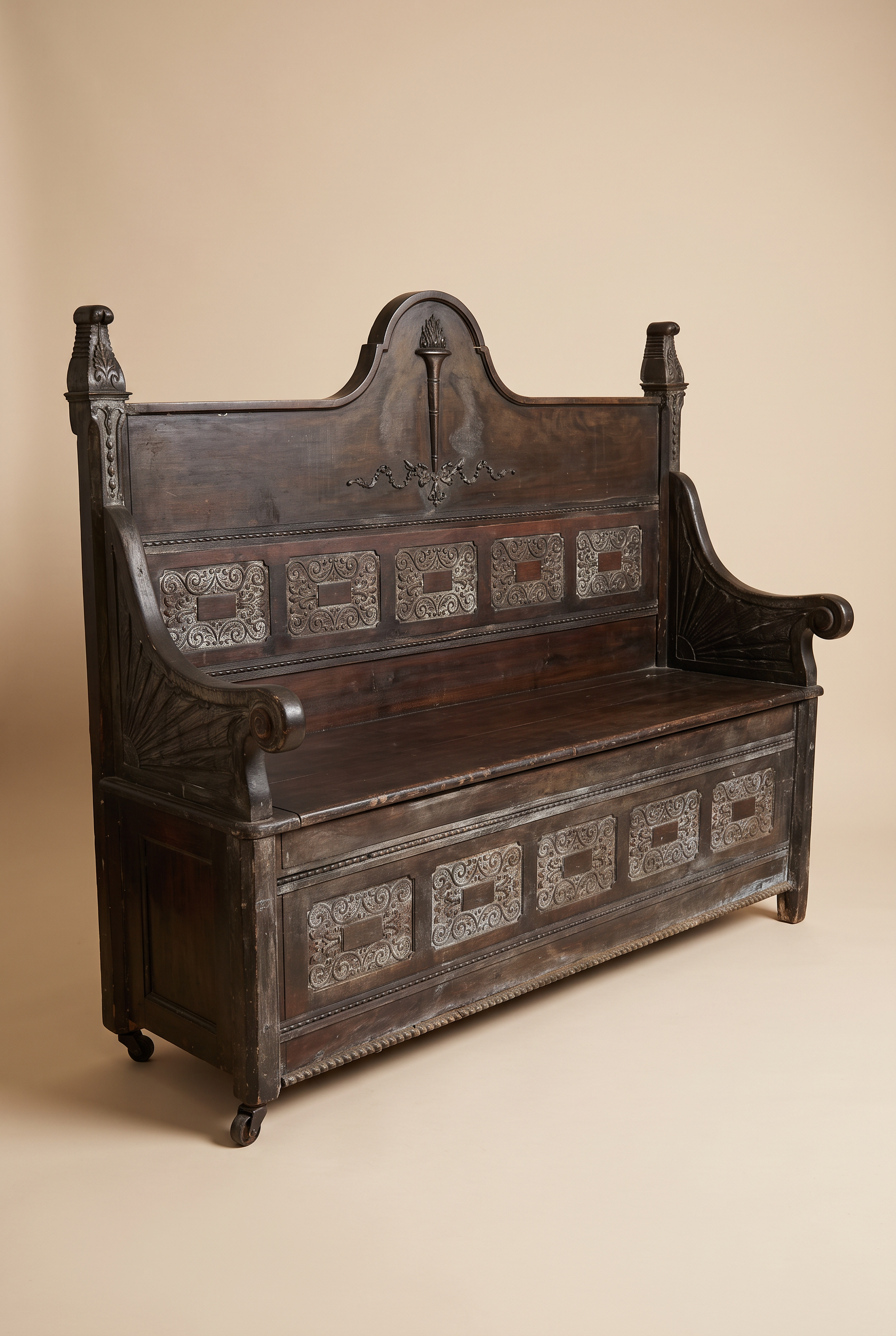
A stately wooden hall bench featuring a high, shaped back crowned by a carved torch motif and delicate ribbon-like garlands. Tall ornamental posts frame the back, while sweeping arms end in rounded scrolls above fan-shaped carved side panels.
Two rows of five decorative plaques enrich the backrest and enclosed lower front, their intricate scrolling patterns contrasting with the dark wood finish. A broad wooden seat, paneled sides, and small visible casters complete the substantial silhouette. Surface wear and finish variations add texture to this distinctive piece, suited to an entryway or spacious hallway.
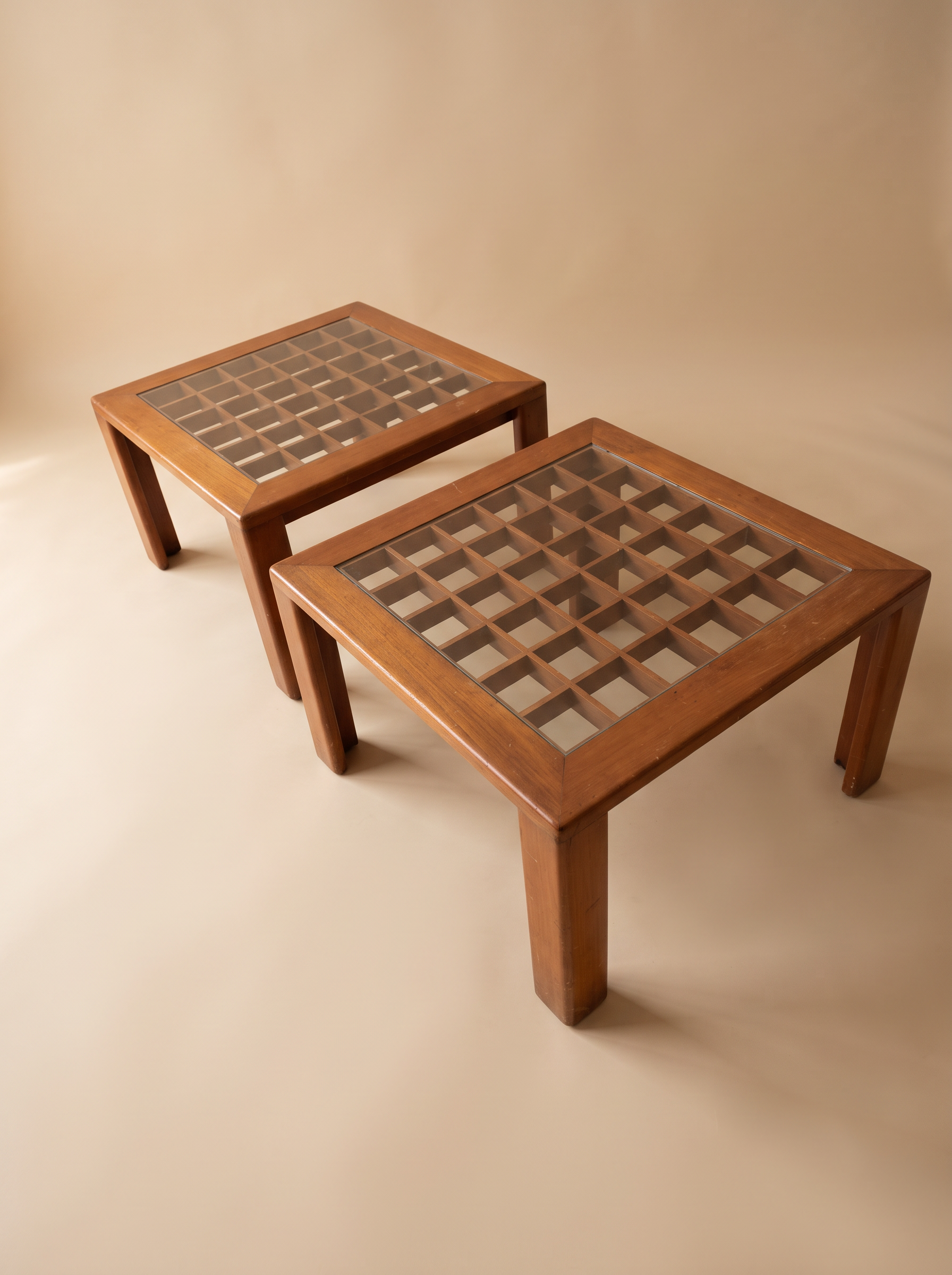
A coordinating pair of square wooden side tables featuring geometric lattice insets, broad frames, and straight legs. Their warm honey-brown finish highlights the wood grain, while clean lines give the pair a versatile, understated appeal.
Ideal beside armchairs or at either end of a sofa, these tables bring warmth and visual texture to a living space.
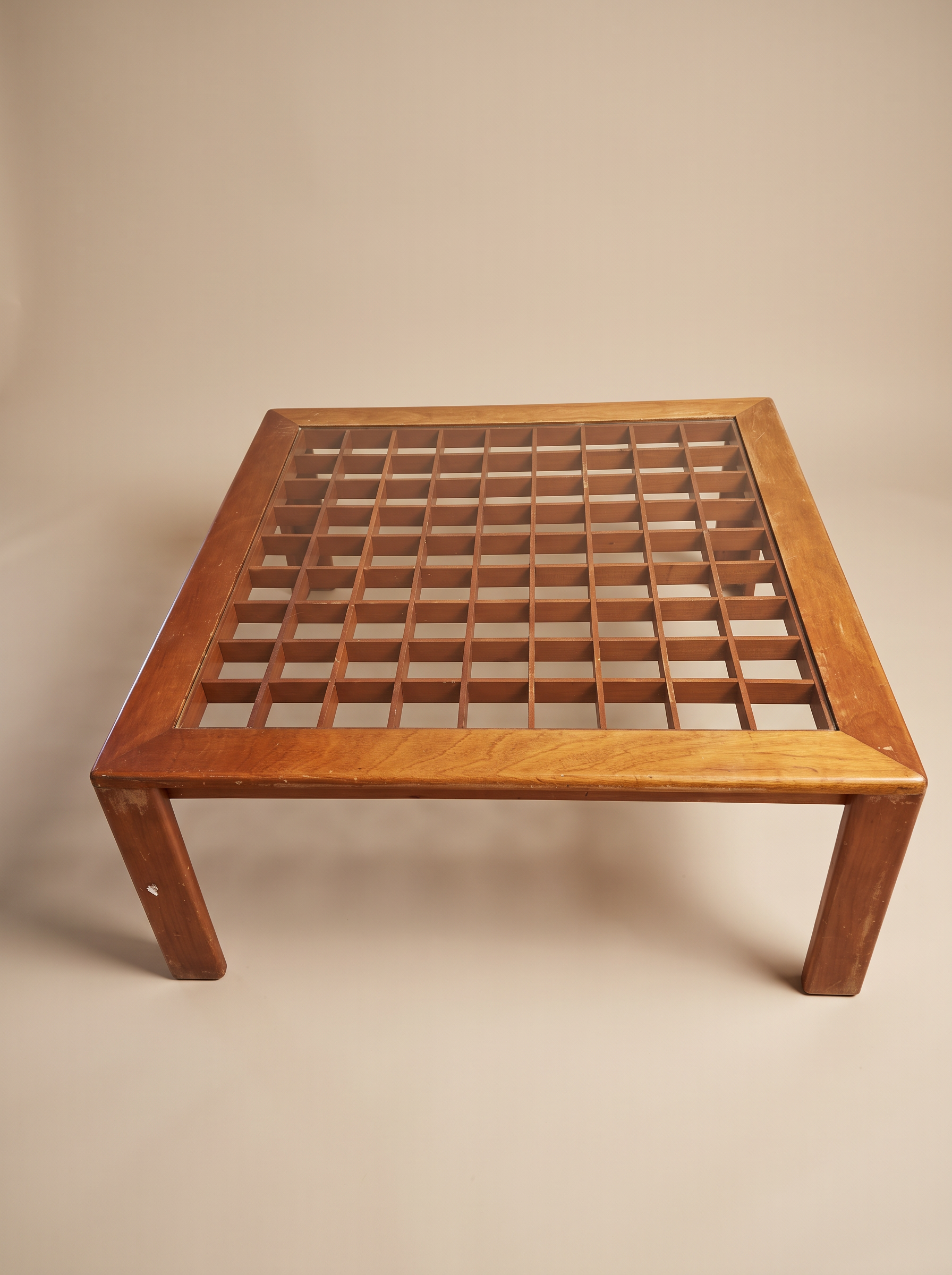
A distinctive square coffee table featuring a geometric wooden lattice inset, a broad frame, and straight legs. Its warm honey-brown finish highlights the wood grain, while visible surface wear adds character.
The glass top is missing. A replacement glass top is needed to create a continuous, usable surface.
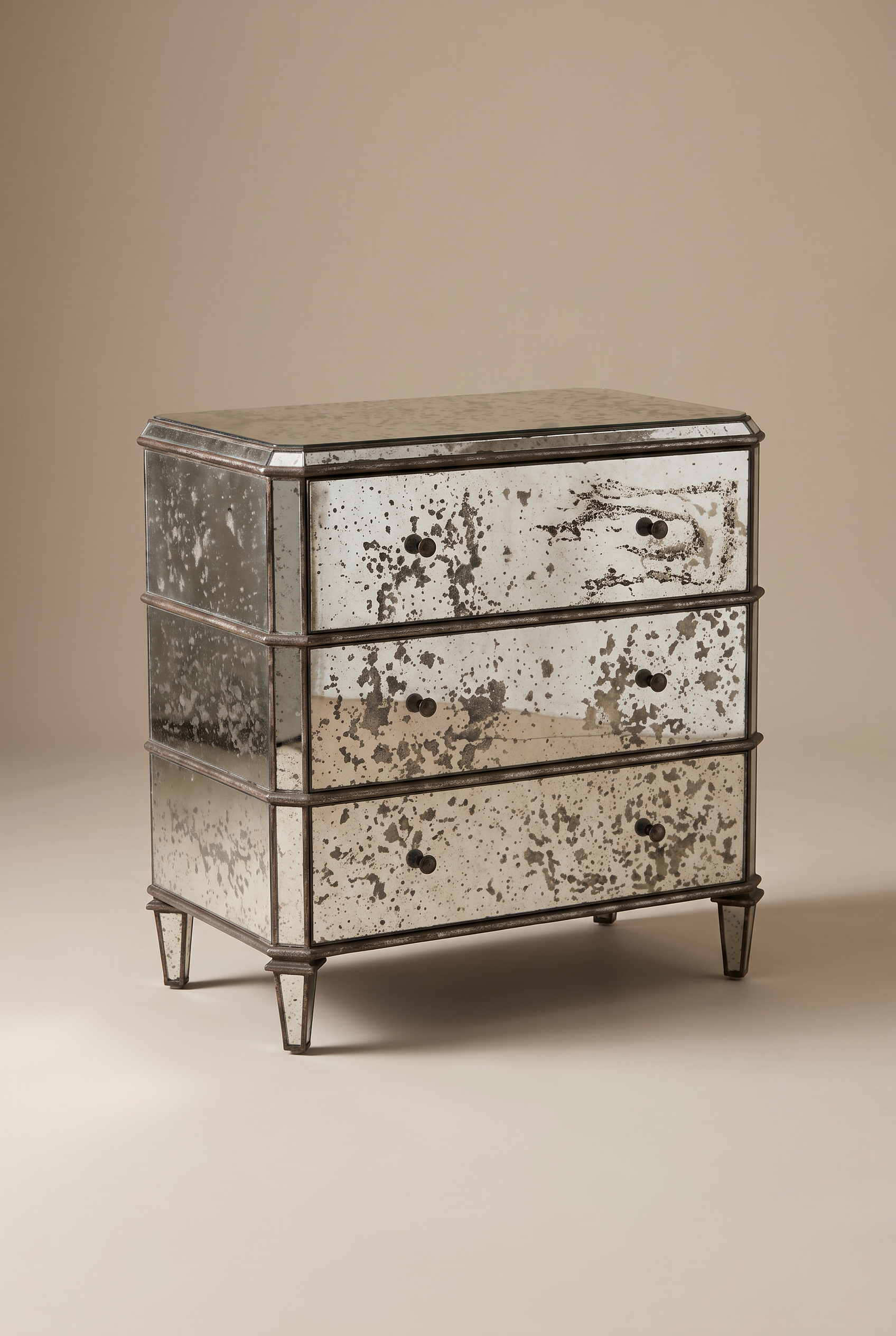
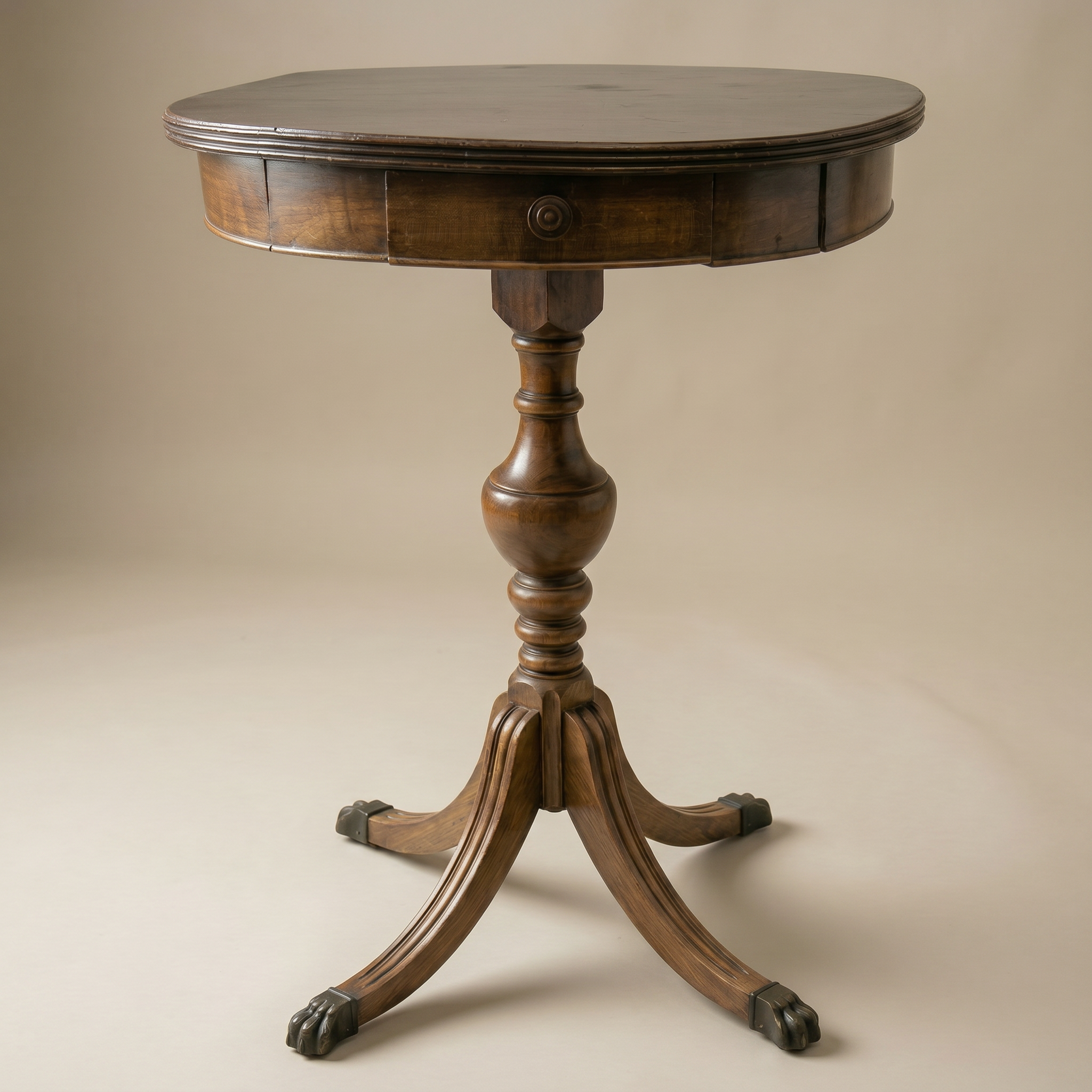
A distinctive three-drawer accent chest featuring mirrored panels with a richly mottled, aged appearance. Reflective surfaces cover the drawer fronts, sides, and top, framed by warm metallic-toned trim that defines its clean silhouette.
Each drawer is fitted with two dark round knobs, while short tapered legs repeat the mirrored detailing below. The contrast between the softly reflective panels and darker edging gives the piece depth and character, making it an elegant accent for a bedroom, entryway, or living space.
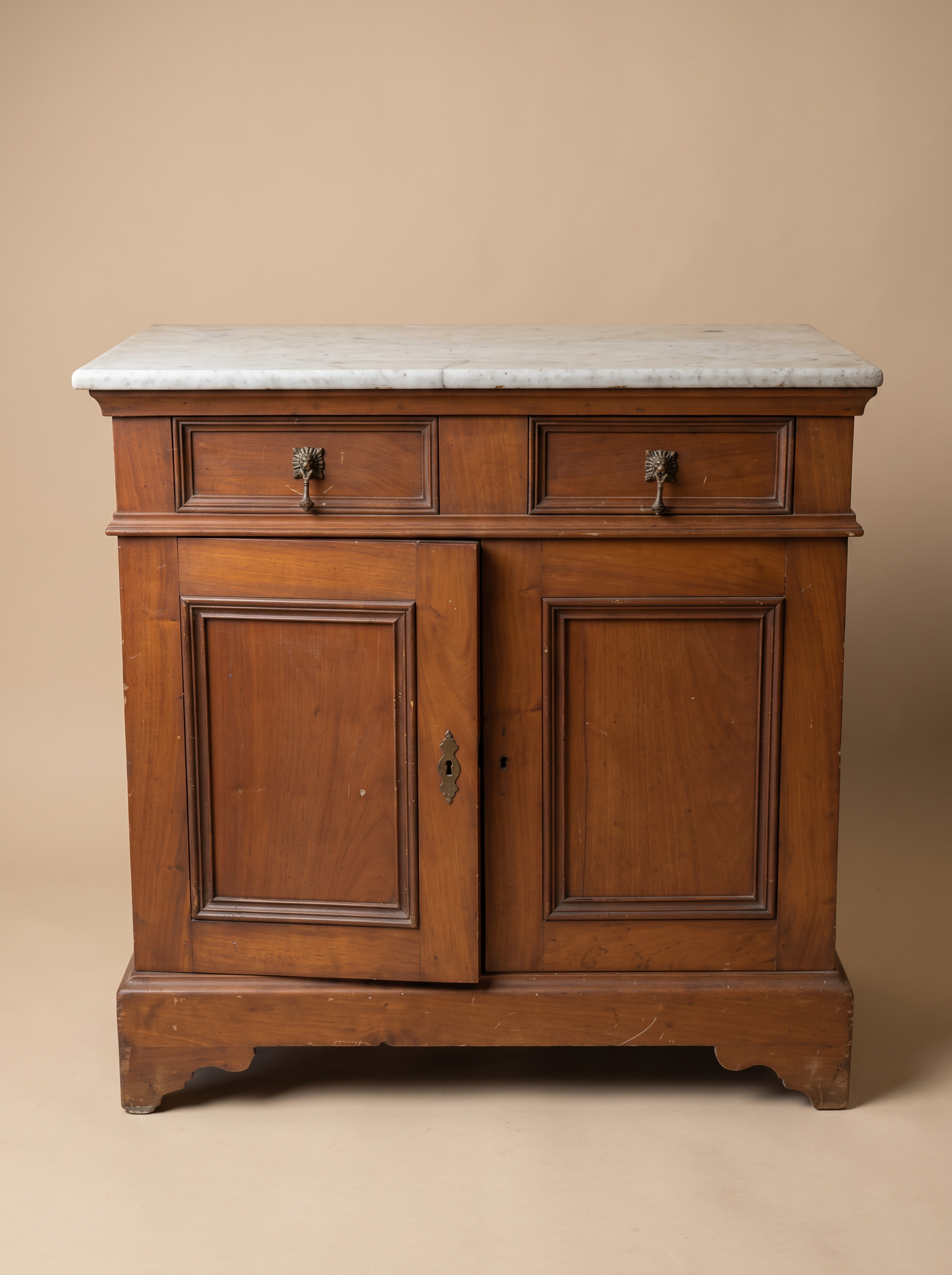
A compact sideboard with a pale marble top, two drawers, and paneled cabinet doors. Warm wood tones and decorative metal pulls give it an understated, classic look. A versatile piece for an entryway, dining room, or living space.
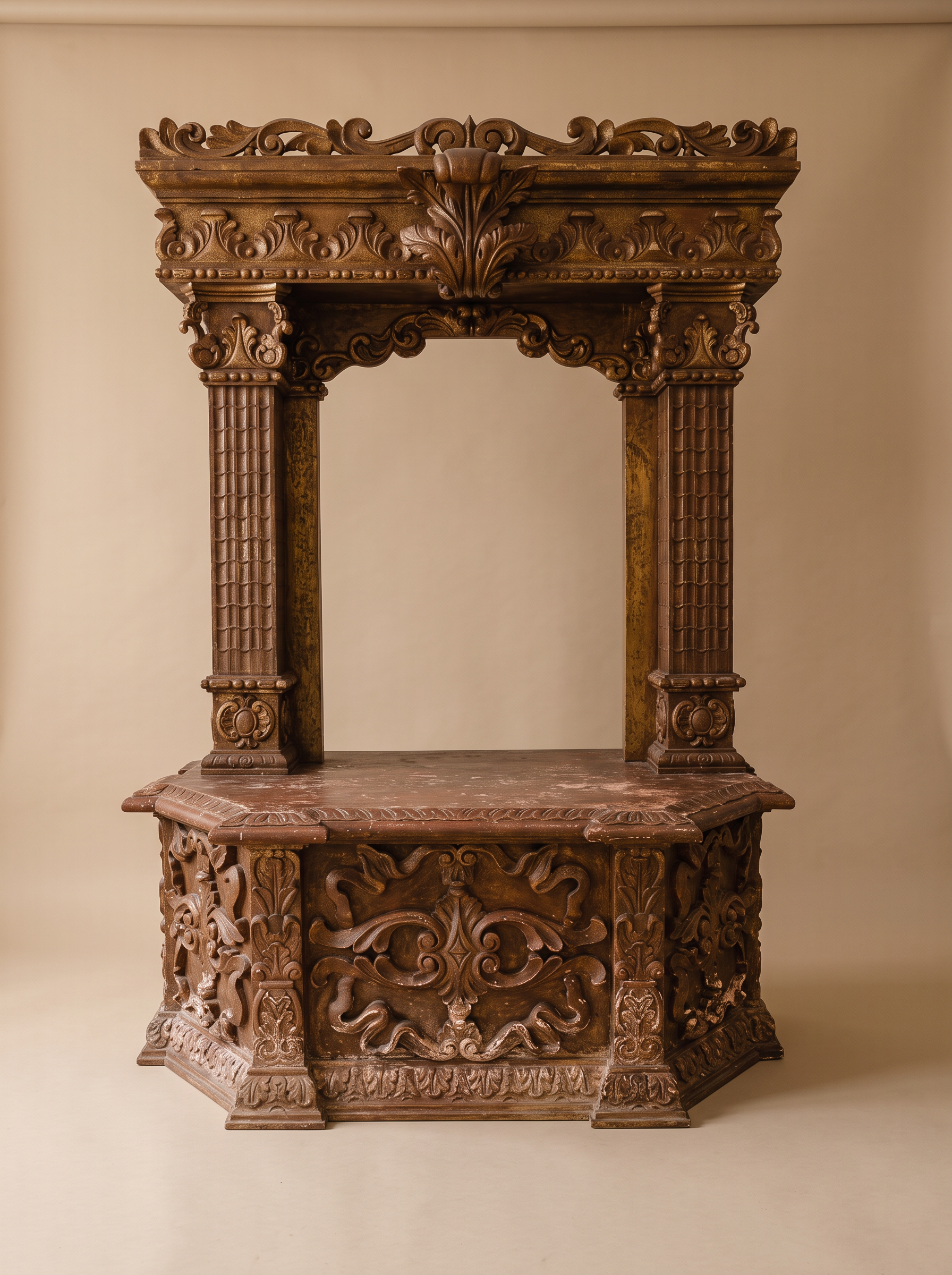
A striking architectural piece framed by fluted columns and elaborate floral carvings. Its open center offers a beautiful place to display a religious figure or cherished object, while the richly detailed base and crown make it a focal point on its own.

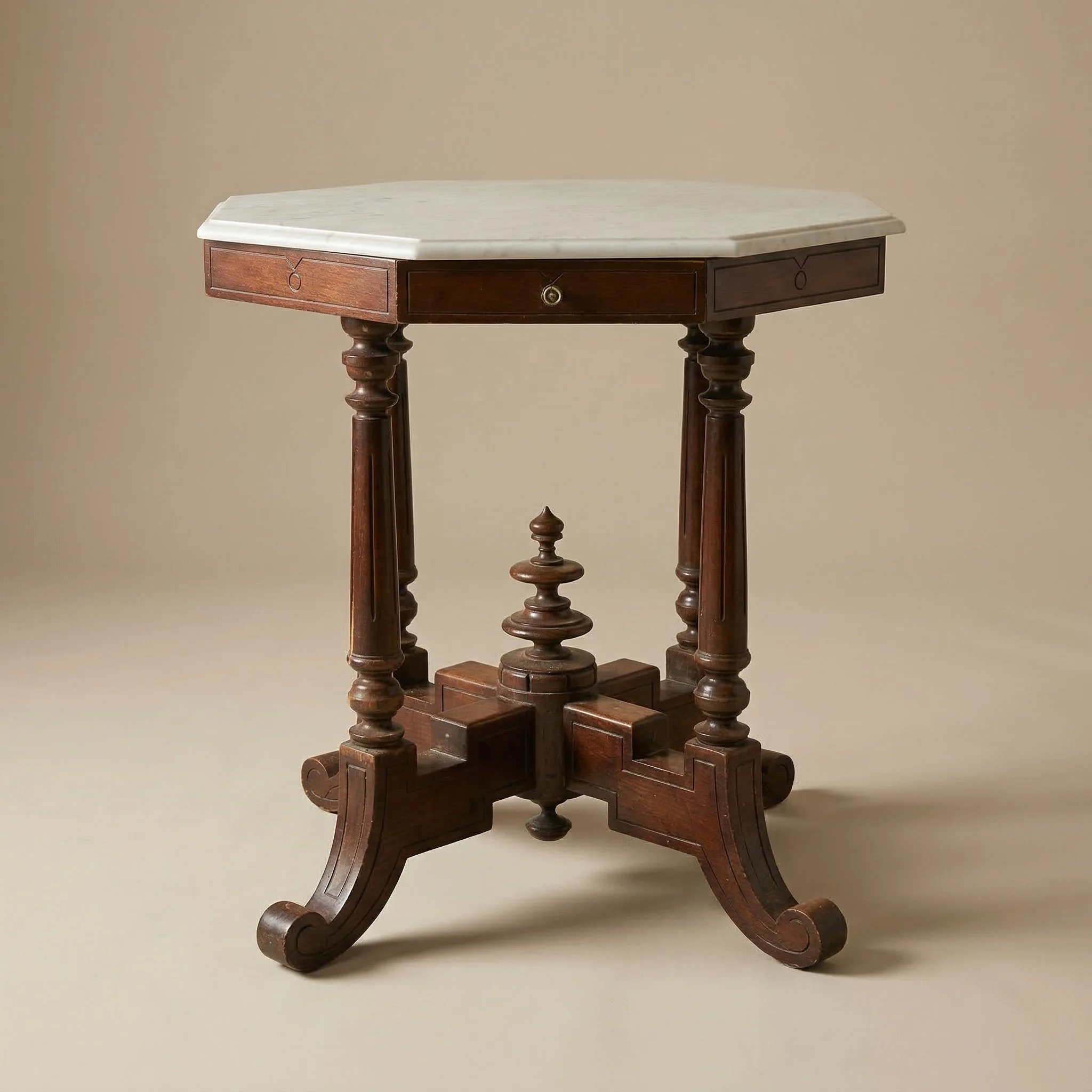
MP - 001
Circa: 1870–1890
“Type: Marble-top center / parlor table (White catarra style marble)
Style: Late Victorian Renaissance Revival influence Region: Most likely American or European export pieceWood: Likely walnut or stained hardwood. “
34” X 21” X 28.5”

MP - 016
“Date (circa): 1900–1930
Type: Dining Table
Style: Georgian Revival
Region: England (probable) or English-style manufacture
Wood: Mahogany (likely veneer over hardwood core)
90.5” X 40” X 29” high

MP - 018
Date (circa): 1860–1885” “Type
Console Table with Mirror (Pier Console)
Style: Napoleon III / Second Empire
Region: Most likely France or French-influenced European manufacture
Wood: Likely Walnut with marquetry inlays
Stone Top: White marble slab
49” X 26.5” X 103” high

MP - 019
Date (circa) Likely late 19th century – early 20th century
(c. 1880–1920)
Type: Religious Architectural Element
Style: Neoclassical Ecclesiastical
Region: Most likely Latin America
Wood: Likely cedar or tropical hardwood”
94” X 30” X 125”

MP - 020 a
Date (circa) 1910 – 1930
Type: Twin Bed Frames
Style: Spanish Colonial Revival
Region: Most likely Spain, Argentina, or Latin American manufacture
Wood: Likely walnut, cedar, or algarrobo
80.5”” X 41 1/4”” X 61”” high
79 3/8”” X 40 3/8”” X 60 5/8 high”

MP - 020 b
Date (circa): 1910 – 1930
Style: Spanish Colonial Revival
Region: Most likely Spain, Argentina, or Latin American manufacture
Wood: Likely walnut, cedar, or algarrobo
“80.5”” X 41 1/4”” X 61”” high
79 3/8”” X 40 3/8”” X 60 5/8 high”

MP - 004
Circa: 1870–1890
Type: Nightstands / washstands
Style: Victorian Rococo Revival
Region: Probably American or European export furniture
Wood: Walnut (likely walnut veneer over secondary wood) 16” X 16” X 33”

MP - 21
Date (circa): 1880 – 1910
Type: Bed Frame (Headboard and Footboard)
Style: Late Victorian Decorative Metalwork.
Region: Most likely United States or Europe.
Material: Likely cast iron with brass plating or brass over iron”
58.5” X 58” high

MP - 023
“Date (circa): 1900 – 1930
Type: Side Chairs (Café / Bistro Chairs)
Style: Bentwood / Viennese Secession Influence
Region: Austria / Central Europe
Wood: Beechwood (steam-bent)
Additional information: These chairs belong to the Central European bentwood tradition, similar to Thonet but produced by Jacob & Josef Kohn and Fischel, among others.”
36” high

MP - 025
“Date (circa): 1900 – 1930
Type: Dining Armchairs
Style: Bentwood
Region: Austria / Central Europe
Wood: Beechwood (steam-bent)
Additional information: Fischel was a well-known manufacturer of bentwood furniture, producing higher-end café seating comparable to Thonet.
40.5” high

MP - 029
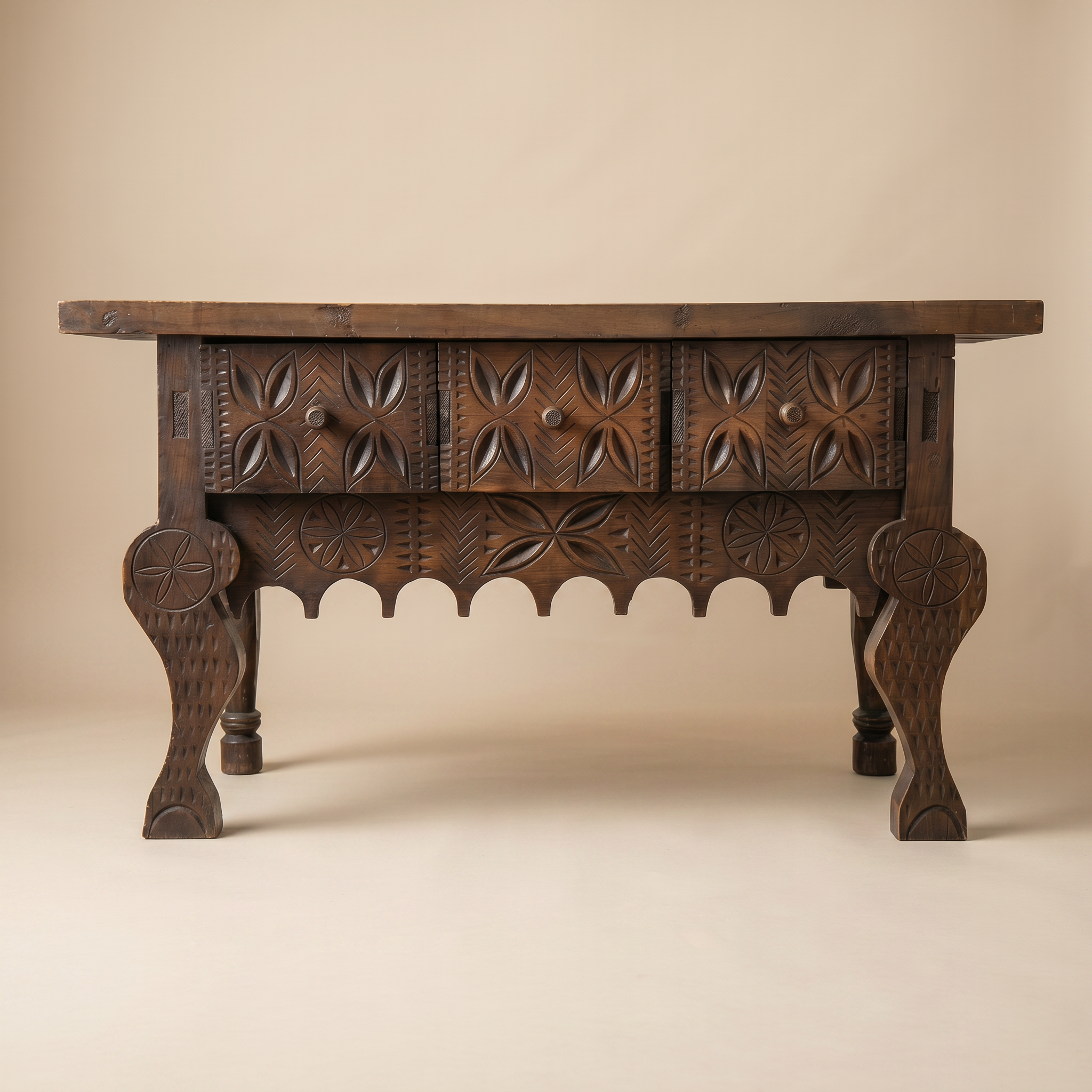
Date (circa): Most likely mid-20th century (c. 1940–1970)” Type: Credenza
Style: Guatemalan Folk
Region: Nahualá, Sololá, Guatemala
Nahualá is known for:
hand-carved wooden furniture traditional motifs artisanal production (20th century, often)
Wood Local hardwood (likely cedar or pine)”
64” X 17” X 24.5”

MP - 033
“Date (circa):Early–mid 20th century (c. 1920–1960)
Style: Ecclesiastical / Spanish Colonial Revival
Region: Most likely Guatemala or Mexico.
Influenced by Spanish Catholic tradition
Wood: Solid local hardwood (likely cedar or similar)”
21” X 18” X 27”

MP - 002
Circa 1865–1885
Type: Marble-top parlor table (center / occasional table)
Style: Victorian Renaissance Revival (with Classical Revival elements)
Region: Likely American (late 19th-century factory production, common in the U.S. and exported to Latin America)
Wood: Walnut (likely solid walnut with walnut-veneered elements)
36” X 26” X 19”

MP - 006
$1,500.00
Circa:1865–1885 “Type
Console / Pier Table (designed to sit against a wall under a mirror)
Style: Victorian Renaissance Revival
Region:United States
Wood Primary wood: Black Walnut
Secondary woods underneath are usually poplar or pine. 6 31” X 23” X 28”

MP - 030
“Date (circa): Most likely mid-20th century (c. 1940–1970)
Type: Credenza
Style: Guatemalan Folk
Region: Nahualá, Sololá, Guatemala
Important note:
Nahualá is known for: hand-carved wooden furniture traditional motifs artisanal production (20th century, often)
Wood Local hardwood (likely cedar or pine)”””
58” X 16.5” X 24”

MP - 032
Date (circa): Early–mid 20th century (c. 1920–1950)
Type: Tall Chest / Lingerie Chest / Semainier-style chest
Style: French-inspired / Louis XVI Revival (transitional neoclassical)
Region Most likely: Europe (France or Italy) or a high-quality export piece, Wood: Primary structure: hardwood (likely oak or similar)Exterior: wood veneer (probably walnut or mahogany veneer) Top: marble (likely Carrara-type)”
17” X 12.5” X 50”
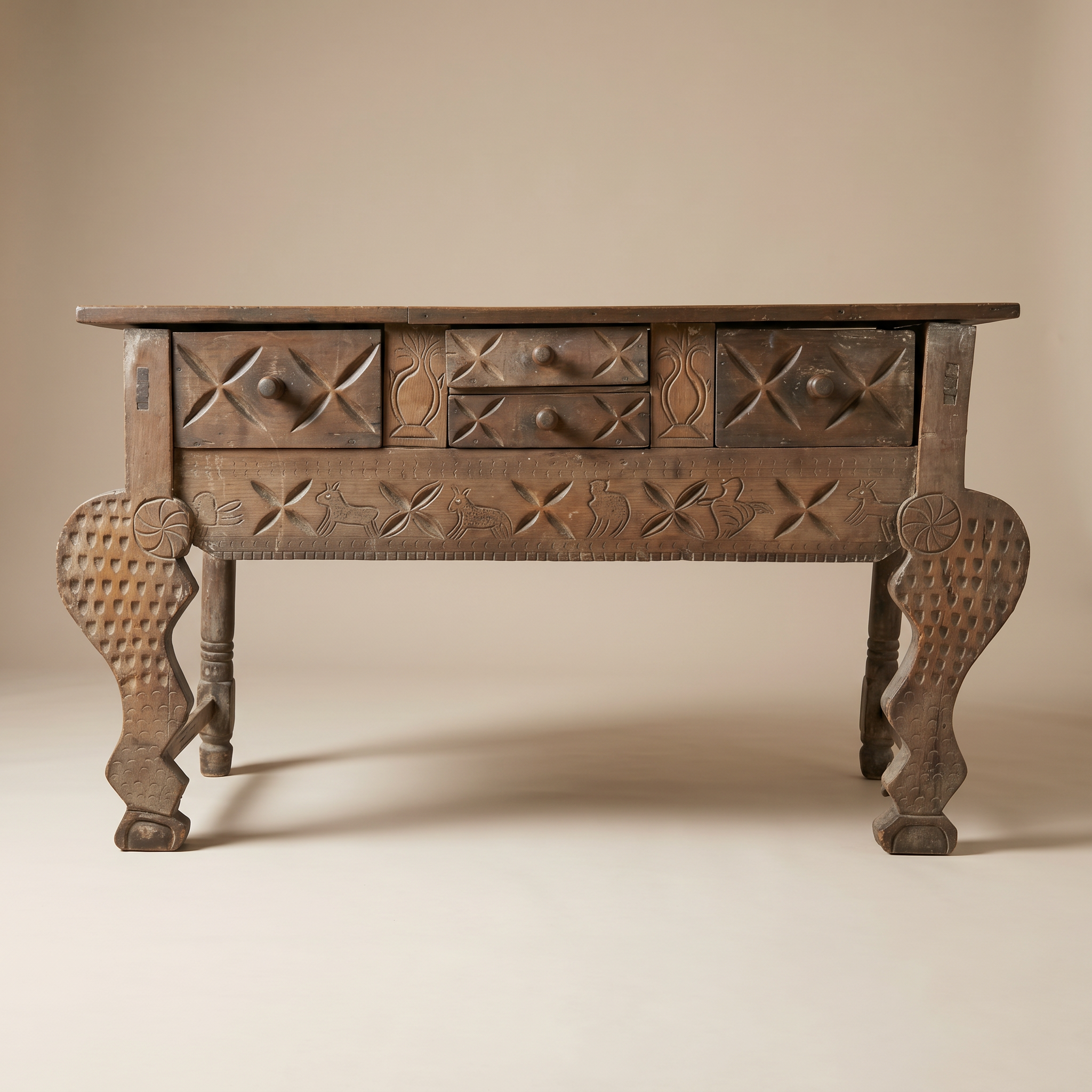
MP - 031
Date (circa): Most likely mid-20th century (c. 1940–1970)” Type: Credenza
Style: Guatemalan Folk
Region: Nahualá, Sololá, Guatemala
Nahualá is known for: hand-carved wooden furniture traditional motifs artisanal production (20th century, often)
Wood: Local hardwood (likely cedar or pine)”
51.5” X 21.5” X 31”
No results match your search. Try removing a few filters.